
How Can You Start Losing Weight Before the Holidays Safely?
You can begin losing weight before the holidays by making realistic changes to your meals, movement, and daily routine. You do not need a crash diet or a perfect schedule. If weight has been difficult to manage, a physician can help you understand possible health factors and choose a plan that fits your needs.
Why Start Working on Your Weight Before the Holidays?
The weeks before holiday gatherings offer a chance to practice healthier habits before schedules get crowded. Instead of waiting for January, you can begin with a few choices you can repeat: eating regular meals, getting more movement, and making sleep a priority.
Excess weight can be associated with high blood pressure, type 2 diabetes, sleep apnea, and fatty liver disease. But weight is not simply a question of willpower. Genetics, stress, some medications, health conditions, and the environment can all influence appetite and body weight. A thoughtful plan accounts for those factors instead of blaming the person trying to make a change.
What Everyday Habits Support Losing Weight Before the Holidays?
A useful holiday weight management plan should work on ordinary Tuesdays, not only on days when you have plenty of free time. The CDC recommends a combination of nutritious eating, physical activity, sleep, and stress management for healthy weight control.
- Keep meals consistent. Build meals around vegetables or fruit, protein, and satisfying high-fiber foods. Skipping meals to save calories for a party may leave you overly hungry later.
- Make movement convenient. Walk after lunch, take the stairs when practical, or plan an activity with a friend. Start at a level appropriate for your health.
- Plan for celebrations. Enjoy foods you love, eat slowly, and decide which choices matter most to you. One meal does not determine your progress.
- Protect your sleep. Busy evenings can push bedtime later. A dependable sleep routine can make other healthy habits easier to maintain.
The CDC’s guidance on losing weight encourages specific, realistic goals and a plan you can review over time. Progress might include better consistency, improved stamina, or a healthier relationship with food, not just changes on a scale.
How Does Physician-Supervised Care Address Stubborn Weight Gain?
Some people make meaningful lifestyle changes and still struggle with hunger, weight regain, or medical conditions that complicate progress. A medical evaluation can review weight history, current medications, blood pressure, sleep, and metabolic risk factors. Your clinician may recommend laboratory testing or other assessments based on your history.
At MacArthur Gastroenterology Inc., a personalized weight management program begins with a consultation and focuses on nutrition guidance, monitoring, and treatment options when appropriate. For a closer look at appointments and follow-up, read how physician-supervised weight management works.
What Role Can Medication Play?
For some adults, medication may be one part of a broader plan. Compounded GLP-1 medication is considered only after an individual physician evaluation when clinically appropriate and legally available. It may help with appetite management, but it does not replace nourishing meals, activity, or follow-up visits. Individual results vary, and medication is not suitable for everyone.
When prescribed through MacArthur Gastroenterology Inc., compounded GLP-1 medication is administered in the clinic by subcutaneous injection and is never shipped to patients. Compounded medications are not FDA-approved. The FDA explains that compounded drugs do not undergo its premarket review for safety, effectiveness, and quality, and should generally be reserved for patients whose needs cannot be met by an approved drug.
Patients should discuss possible side effects, medication interactions, and reasons a treatment might be inappropriate with their physician. The FDA’s information on unapproved GLP-1 drugs offers additional safety context. A clinician should decide whether any medicine is appropriate for your individual circumstances.
What Does Weight Management Have to Do With Fatty Liver Disease?
Fatty liver disease, now often called metabolic dysfunction-associated steatotic liver disease, can develop without noticeable symptoms. Conditions such as insulin resistance, type 2 diabetes, and excess body weight can increase concern about liver health. Not everyone with these risk factors has liver disease, which is why an individual assessment matters.
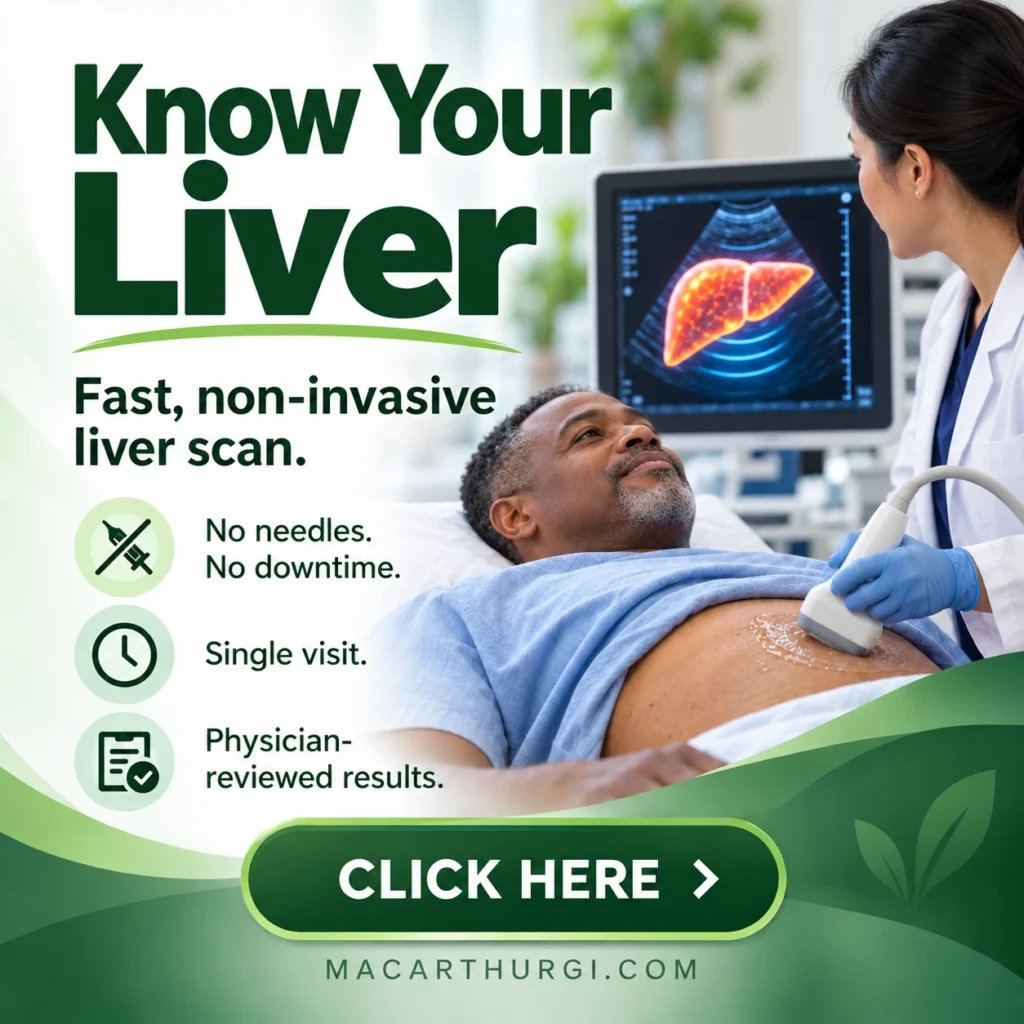
MacArthur Gastroenterology Inc. offers fatty liver screening using Velacur ONE, an office-based ultrasound elastography device that evaluates markers of liver fat and stiffness. A scan helps inform medical evaluation but does not establish a diagnosis on its own. Your physician can discuss whether screening is appropriate for you.
How Can You Take the First Step Before the Holidays?
Start with a manageable goal you can keep through the season. Write down one meal habit to improve, choose when you will move, and arrange a medical consultation if you want personalized support. You do not need to transform everything before the next celebration to begin making progress.
To explore physician-supervised options, schedule a consultation with MacArthur Gastroenterology Inc. (Mac GI), 10520 MacArthur Blvd., Oakland, CA 94605, Office: (510) 562-7467. A consultation comes first, before any decision about enrollment or medication. This information is educational, not individual medical advice. Talk with your physician about the safest approach for you.
Frequently Asked Questions
Is It Realistic to Start a Weight Management Plan During the Holiday Season?
Yes. A few repeatable habits can be a useful beginning, even if your schedule is busy. Focus on consistency rather than trying to reach a particular number by a holiday.
Does Everyone Need Medication to Lose Weight?
No. Nutrition, movement, sleep, and behavioral support remain important. Whether medication is appropriate depends on your medical history, clinical evaluation, and personal goals.
Should I Ask About Fatty Liver Screening if I Am Concerned About My Weight?
It may be worth discussing, particularly if you also have diabetes, abnormal liver tests, or other metabolic risk factors. Your physician can assess whether testing is indicated.
References
- Centers for Disease Control and Prevention: Steps for Losing Weight
- U.S. Food and Drug Administration: FDA’s Concerns With Unapproved GLP-1 Drugs Used for Weight Loss

Dr. Ralph Peterson brings more than 40 years of medical experience to MacArthur Gastroenterology, including over 30 years specializing in gastroenterology and internal medicine. For more than 12 years, his practice has focused on treating viral hepatitis, achieving a cure rate above 90% in Hepatitis B and C cases. He is a sought-after speaker and medical presenter on colorectal cancer and on the treatment and cure of Hepatitis B and C.
Dr. Peterson has served on the advisory boards of leading pharmaceutical companies, including Gilead, and is also Medical Director of uFirst Health Partners, a nonprofit organization dedicated to fatty liver disease awareness and education. He also leads research and development at NEXT2ME, LLC, where he invented the 1440 Vibrational Energetic Spray supplement line.
His work has taken him well beyond the clinic, including service as a medical team leader in Sierra Leone, evaluating medical needs across multiple provinces, and as a volunteer physician in Bohol, Philippines, training local providers in the treatment of gastrointestinal disease and hepatitis.
A former Master's Track & Field world record holder in the 4x100 relay, Dr. Peterson has been recognized by the American Cancer Society, 100 Black Men of America, 100 Black Men of the Bay Area, and the Alameda County Board of Supervisors for his outstanding service to men's health.
- Ralph L. Peterson, MD

- Ralph L. Peterson, MD

- Ralph L. Peterson, MD

- Ralph L. Peterson, MD