Fatty Liver Screening
Know Your Liver.
Know Your Risk.
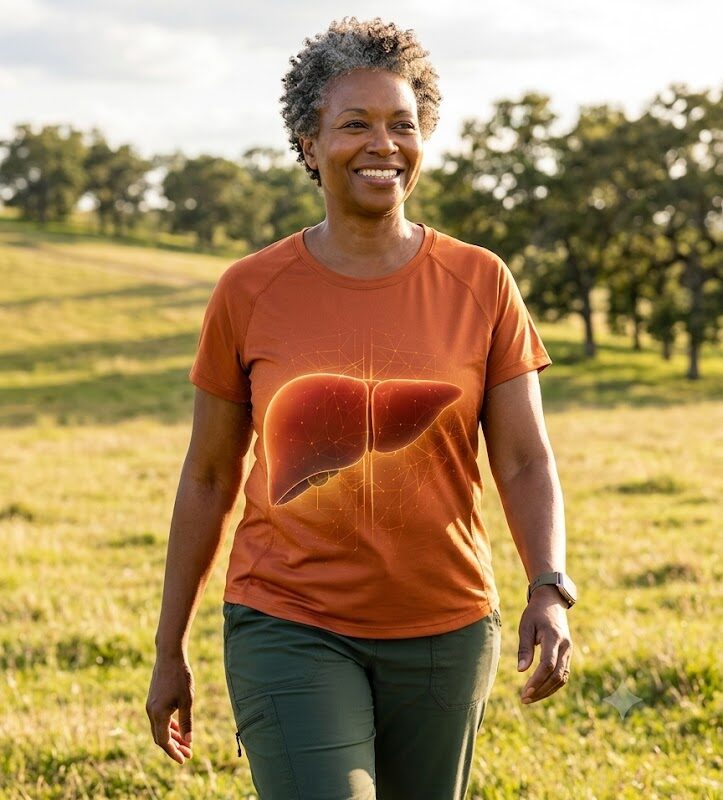
Fatty liver disease is common, usually silent, and often reversible when caught early. A quick, painless scan shows you where your liver health really stands.
You can look healthy, feel healthy, and still have excess fat building up in your liver. Our FDA-cleared liver imaging technology gives you a clear answer in a single visit, with no needles.
Fast,
Single Visit
No needles,
No Sedation
Non invasive
Reviewed with
Your Physician
What is Fatty Liver Disease?
Fatty liver disease, now called MASLD (metabolic dysfunction-associated steatotic liver disease), happens when extra fat builds up inside your liver cells. Your liver handles hundreds of essential jobs: processing nutrients, filtering toxins, and helping regulate blood sugar and cholesterol. When fat accumulates, those functions can quietly begin to suffer.
You do not have to look overweight to have fatty liver. It can develop in people who feel healthy, are a normal weight, and have no obvious symptoms.
Could you be at risk?
Many everyday factors raise the odds, and most people have no idea. Take the 2 minute check to see whether a scan makes sense for you.
- Type 2 diabetes or prediabetes
- Overweight or obesity
- High blood pressure
- High cholesterol or elevated triglycerides
- Metabolic syndrome
- Type 2 diabetes or prediabetes
- Overweight or obesity
- High blood pressure
- High cholesterol or elevated triglycerides
- Metabolic syndrome
Your risk appears low
Based on your answers, you don't currently show the key risk factors most associated with fatty liver disease. Keep up your healthy habits.
We recommend a liver scan
Your answers point to one or more risk factors linked to fatty liver disease. The good news: when caught early, it is often reversible.
Daily habits matter too. Regular soda, sweet tea, juice, energy or sports drinks, foods with high fructose corn syrup, frequent fast food, and evening sweets all add up. The liver turns excess sugar into fat over time.
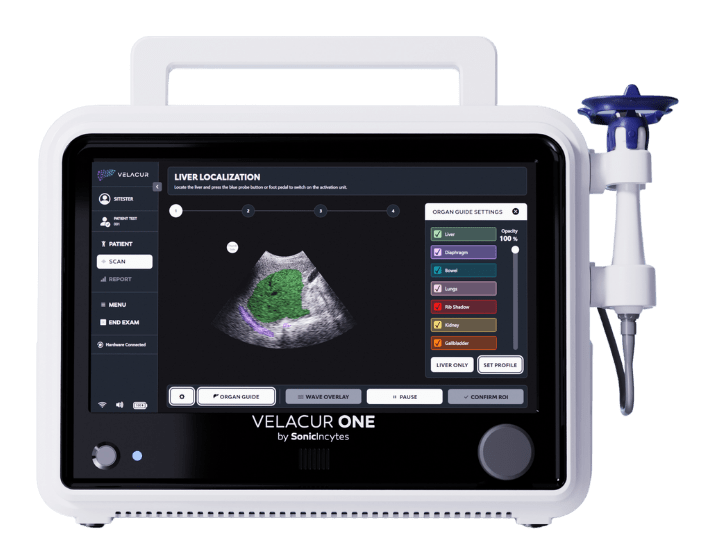
A clear picture, without needles
- Non invasive, no needles, no sedation
- Done right here in our office, in a single visit
- Measures liver fat and liver stiffness
- Results reviewed with your physician
Our FDA-cleared liver assessment system uses AI-guided ultrasound elastography to evaluate your liver. It measures liver stiffness and attenuation, and reports liver fat fraction score, a measure of liver fat that correlates with MRI-PDFF. It also includes B-mode imaging, so your physician sees the tissue as well as the numbers. our FDA-cleared liver assessment system received FDA 510(k) clearance in August 2025.
Blood tests may suggest fatty liver, but they often cannot tell how much fat or scarring is actually present. A direct scan can.
The good news: Early Fatty Liver is Often Reversible!
Fatty liver tends to progress silently, from simple fat buildup, to inflammation, to scarring. That progression is not inevitable. Caught early, even modest weight loss and lifestyle changes can significantly reduce liver fat and inflammation, and in many cases stabilize or reverse it. The first step is simply knowing where you stand.
1. Fatty liver
fat builds up
2. Inflammation
liver becomes irritated
early scarring
advanced scarring
serious
Care led by a specialist
Cost and Access
Simple to get started
Many insurance plans may cover the examination when medically appropriate.
Your weight and your liver are connected
The same metabolic factors behind stubborn weight gain, insulin resistance and excess body fat, are leading drivers of fatty liver. If you are working on your weight, your liver is part of the same picture.
Take the first step. Get the free guide.
Complete the form below to receive your free Liver Health Guide. Our team will reach out to help you schedule your scan.
Secure and confidential.
Your information is used only to contact you about fatty liver screening.
Questions patients ask
You do not have to feel sick to check your liver health. Fatty liver disease can affect people who feel healthy, as well as people with known health conditions. Screening can provide important information about liver fat and possible liver scarring, so you can discuss appropriate next steps with your healthcare provider.
Why should I get a fatty liver screening if I feel healthy?
Fatty liver disease can develop without noticeable symptoms. You may feel perfectly healthy while changes are occurring in your liver. Screening can help identify potential concerns earlier and give you information to discuss with your healthcare provider.
Who should consider a fatty liver screening?
Screening may be especially helpful for people who have overweight or obesity, type 2 diabetes or prediabetes, high cholesterol or triglycerides, high blood pressure, abnormal or elevated liver enzymes, metabolic health concerns, or a history of fatty liver. Even without these risk factors, someone interested in learning more about their liver health may want to ask whether screening is appropriate.
Can healthy or active people have fatty liver?
Yes. Although metabolic conditions can increase the risk, fatty liver is not limited to people who are overweight or visibly unhealthy. Genetics, diet, alcohol use, medications, metabolic health, and other factors can influence liver health.
Does the screening hurt?
The liver scan is noninvasive and does not require needles, injections, sedation, or surgery. The scan is performed externally over the liver area and generally takes only a short amount of time.
What does a fatty liver screening measure?
our FDA-cleared liver assessment system, our point of care liver assessment system, uses AI guided ultrasound elastography to provide information about liver stiffness and liver fat, reporting liver fat fraction score along with B-mode imaging. Results can help your healthcare provider determine whether additional evaluation, monitoring, laboratory testing, or lifestyle changes may be appropriate.
What happens if my results show fatty liver or possible scarring?
An abnormal screening result does not automatically mean you have advanced liver disease. Your healthcare provider can review the findings along with your medical history, laboratory results, medications, and other risk factors and determine whether additional evaluation or follow-up is appropriate.
What can I do to improve my liver health?
Depending on your individual health needs, your healthcare provider may recommend changes involving nutrition, physical activity, weight management when appropriate, blood sugar control, cholesterol and triglyceride management, blood pressure management, alcohol intake, medication review, and regular medical follow-up.
Why is it important to screen for fatty liver before I have symptoms?
Fatty liver disease can progress silently. Many people may have liver fat or even developing liver scarring without feeling sick or noticing obvious symptoms. Waiting until symptoms appear may mean missing an opportunity to identify liver changes earlier. A simple, noninvasive liver screening can provide valuable information and help identify whether you may benefit from additional medical evaluation, lifestyle changes, or ongoing monitoring.
If my routine blood tests are normal, do I still need to think about fatty liver screening?
Yes. Normal liver blood tests do not always rule out fatty liver disease or liver fibrosis. Some people can have liver disease even when routine liver enzymes are within the normal range. A liver screening provides different information by assessing the liver itself and may help identify concerns that are not obvious from symptoms or routine laboratory testing alone.
Know Your Liver. Know Your Health.
Get Screened. Get Informed. Take Action.
Do not wait for your liver to tell you something is wrong. Know your liver health now.
MacArthur Gastroenterology Inc. (Mac GI)
10520 MacArthur Blvd., Oakland, CA 94605
Office: (510) 562-7467 ext 1
MacArthurGI.com
Screening recommendations depend on individual risk factors. Talk with your healthcare provider.
Any information you submit is handled in accordance with HIPAA privacy standards.
Important: screening does not by itself establish a diagnosis. Results should be interpreted by an appropriately qualified healthcare professional and, when indicated, followed by additional medical evaluation.