
MASLD stands for metabolic dysfunction-associated steatotic liver disease, the current medical term for what most people still call fatty liver disease. It develops when excess fat builds up inside liver cells, usually alongside conditions like obesity, prediabetes, or high blood pressure. Government health researchers estimate it affects roughly a quarter of U.S. adults, and most don’t know they have it.
Why Did the Name Change From NAFLD to MASLD?
For years, this condition was known as non-alcoholic fatty liver disease, or NAFLD. In 2023, a multi-society panel of liver specialists formally adopted the term MASLD instead, for two main reasons. First, “steatotic” replaced “fatty” to move away from language that carried unnecessary stigma.
Second, and more importantly, the new definition ties the diagnosis directly to at least one cardiometabolic risk factor, such as obesity, type 2 diabetes, high blood pressure, or abnormal cholesterol, rather than defining it mainly by what it isn’t (alcohol-related). The American Association for the Study of Liver Diseases outlines this updated diagnostic approach in its practice guidance.
You may still see “fatty liver disease” or “NAFLD” used in older materials or casual conversation. They’re generally referring to the same underlying condition.
How Common Is MASLD?
MASLD is now considered the most common chronic liver condition in the country. The NIDDK estimates about 24% of U.S. adults have it, with the rate climbing among people who also have obesity or type 2 diabetes. Research cited by NIDDK suggests NAFLD is present in up to 75% of people who are overweight and in more than 90% of people with severe obesity.
Because it typically causes no symptoms in its early stages, most people with MASLD don’t know it’s there. That’s part of what makes screening meaningful even for people who feel completely healthy.
What Causes MASLD?
MASLD develops when the liver takes in or produces more fat than it can process and export. The biggest contributors tend to be the same metabolic factors that drive other chronic conditions:
- Obesity or excess weight, even without looking overweight
- Type 2 diabetes or prediabetes
- High blood pressure
- Elevated cholesterol or triglycerides
- Insulin resistance and metabolic syndrome
Diet plays a significant role too. Regular intake of sugary beverages and foods high in fructose is one of the more consistent dietary contributors researchers point to, since excess sugar the liver can’t immediately use tends to get converted into stored fat.
What Are the Stages of MASLD?
MASLD exists on a spectrum, and it doesn’t affect everyone the same way:
- Simple steatosis. Fat accumulates in the liver, often with no inflammation or damage yet.
- MASH (metabolic dysfunction-associated steatohepatitis). The liver becomes inflamed, a more serious stage than simple fat buildup.
- Fibrosis. Ongoing inflammation leads to scar tissue formation.
- Cirrhosis. Extensive scarring impairs liver function.
Most people with MASLD stay at the earlier stages, but progression is why early identification matters. MASLD vs. MASH vs. fibrosis goes deeper into how these stages differ and what each one means for you.
How Is MASLD Diagnosed?
Blood tests can raise suspicion of MASLD, elevated liver enzymes for example, but they can’t reliably tell you how much fat or scarring is actually present. That’s where imaging comes in.
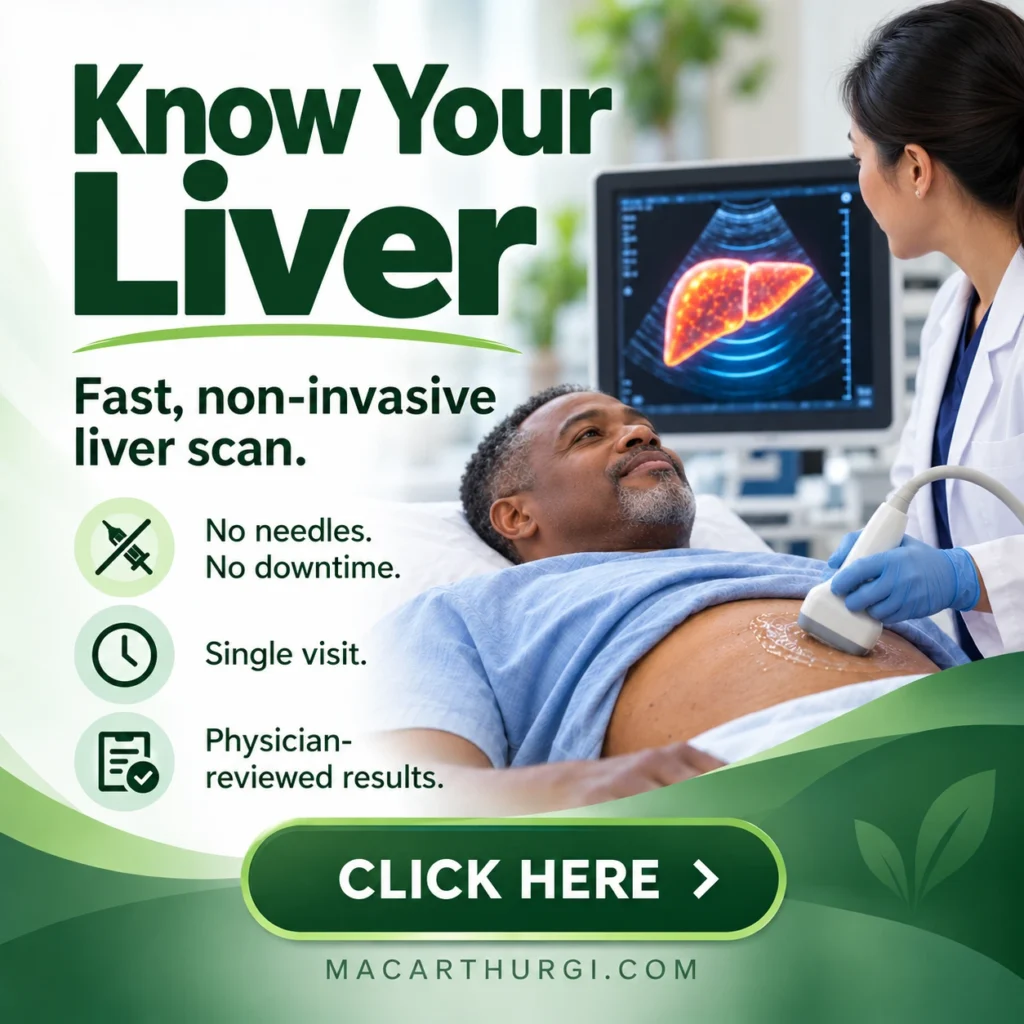
MacArthur Gastroenterology uses a state-of-the-art, FDA-cleared liver assessment using advanced ultrasound elastography technology. A padded activator generates gentle shear waves through the liver while a handheld probe collects 3D measurements of stiffness and fat content, with AI guidance helping locate the liver and confirm scan quality in real time. The scan is noninvasive, requires no needles or sedation, and results are available the same visit.
Many insurance plans may cover the exam when it’s medically appropriate. Coverage varies by plan.
Can MASLD Be Reversed?
Often, yes, particularly when it’s caught early. The condition tends to respond to the same changes that improve metabolic health generally: reducing sugar and processed food intake, managing blood pressure and blood sugar, increasing physical activity, and losing even a modest amount of excess weight. Reversal isn’t guaranteed at every stage, which is part of why catching MASLD before it progresses matters.
Frequently Asked Questions
Is MASLD the same thing as fatty liver disease?
Yes. MASLD is the updated medical term that replaced “non-alcoholic fatty liver disease” (NAFLD) in 2023. They describe the same underlying condition.
Do I need to be overweight to have MASLD?
No. MASLD can occur in people of normal weight, particularly if they have other metabolic risk factors like prediabetes or high triglycerides.
What’s the difference between MASLD and MASH?
MASLD is the broader condition: fat buildup in the liver. MASH is a more advanced stage where that fat has caused inflammation.
Is this article a substitute for a medical evaluation?
No. This content is educational and general in nature, not medical advice. Talk with your physician about your individual risk factors and whether screening is right for you.
References
- NIDDK, Definition & Facts of NAFLD & NASH
- AASLD Practice Guidance on NAFLD, Hepatology 2023, via PubMed
- Sonic Incytes, FDA 510(k) Clearance Announcement

Dr. Ralph Peterson brings more than 40 years of medical experience to MacArthur Gastroenterology, including over 30 years specializing in gastroenterology and internal medicine. For more than 12 years, his practice has focused on treating viral hepatitis, achieving a cure rate above 90% in Hepatitis B and C cases. He is a sought-after speaker and medical presenter on colorectal cancer and on the treatment and cure of Hepatitis B and C.
Dr. Peterson has served on the advisory boards of leading pharmaceutical companies, including Gilead, and is also Medical Director of uFirst Health Partners, a nonprofit organization dedicated to fatty liver disease awareness and education. He also leads research and development at NEXT2ME, LLC, where he invented the 1440 Vibrational Energetic Spray supplement line.
His work has taken him well beyond the clinic, including service as a medical team leader in Sierra Leone, evaluating medical needs across multiple provinces, and as a volunteer physician in Bohol, Philippines, training local providers in the treatment of gastrointestinal disease and hepatitis.
A former Master's Track & Field world record holder in the 4x100 relay, Dr. Peterson has been recognized by the American Cancer Society, 100 Black Men of America, 100 Black Men of the Bay Area, and the Alameda County Board of Supervisors for his outstanding service to men's health.
- Ralph L. Peterson, MD

- Ralph L. Peterson, MD
- Ralph L. Peterson, MD

- Ralph L. Peterson, MD